The Nyonya kebaya costume A moving landscape in Chinatown (2026)
Abstract:
Explore the captivating aesthetics of Southeast Asia! This article takes you to Singapore’s historic Chinatown — a bustling mix of old and new, filled with traditional shops, markets and cafes — and to a stunning photography exhibition reminiscent of the film ’The Little Nyonya.’ Through the perspective of Ms Katie Zheng Liqin, FRSA, curator of Katia Verde Art Gallery, we unveil the history and craftsmanship behind the Nyonya kebaya, a century-old Straits Chinese tradition that is a true blending of Chinese, Malaysian, and European cultures. From exquisite kebaya blouses to hand-beaded slippers, visitors can experience this cultural fusion firsthand at the gallery’s handmade batik bag workshops. This is not just a showcase of costumes, but a touching story of cultural inclusiveness and the interweaving of cross-border aesthetics. Come and experience this vibrant Eastern charm and appreciate the artistic allure that has been passed down for centuries in Chinatown, Singapore!
Encountering Beauty, with Gratitude for the Meeting
A Chance Encounter in Chinatown
’We need to believe that everything is the best arrangement, and we can build something better together.’ — Unknown Poet
In Singapore, the Peranakan culture, a blend of Chinese, Malay, and European cultures, is being reshaped by the efforts of a new generation into a bond connecting diversities and cultures.
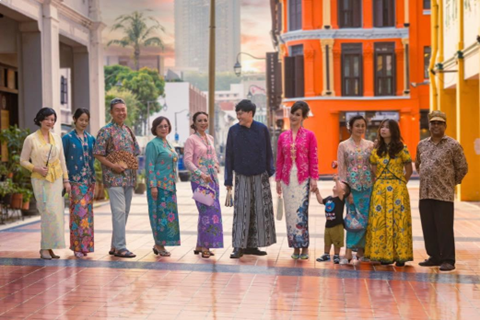
A photography exhibition featuring Peranakan costumes recently made a stunning debut in Singapore’s Chinatown, making it seem as if the characters from the TV series ’The Little Nyonya’ had stepped into reality. Passing tourists stopped to watch curiously, thinking they had stumbled upon a movie crew, and
some even approached to try to get a shot of their own.
This isn’t a film set. This is the scene at the ’Peranakan Through the Lens’ photography exhibition.
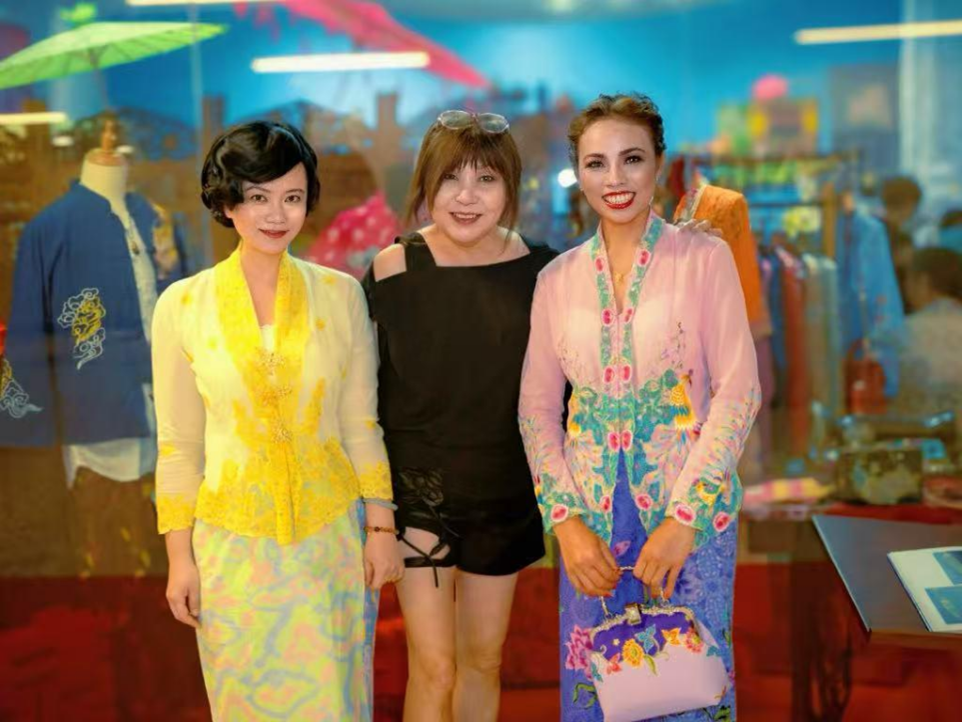
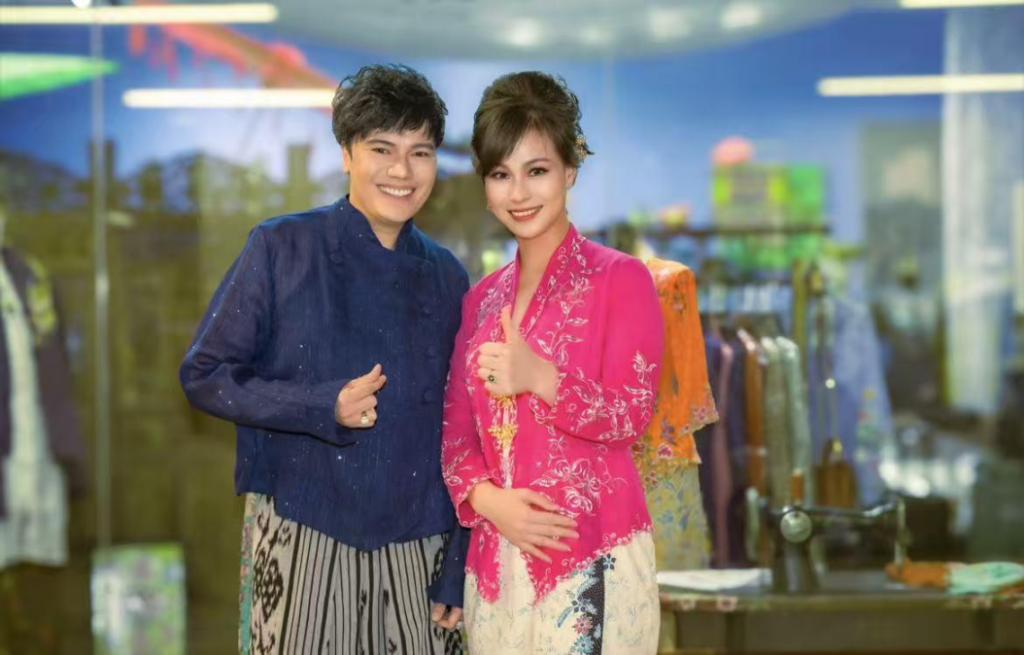
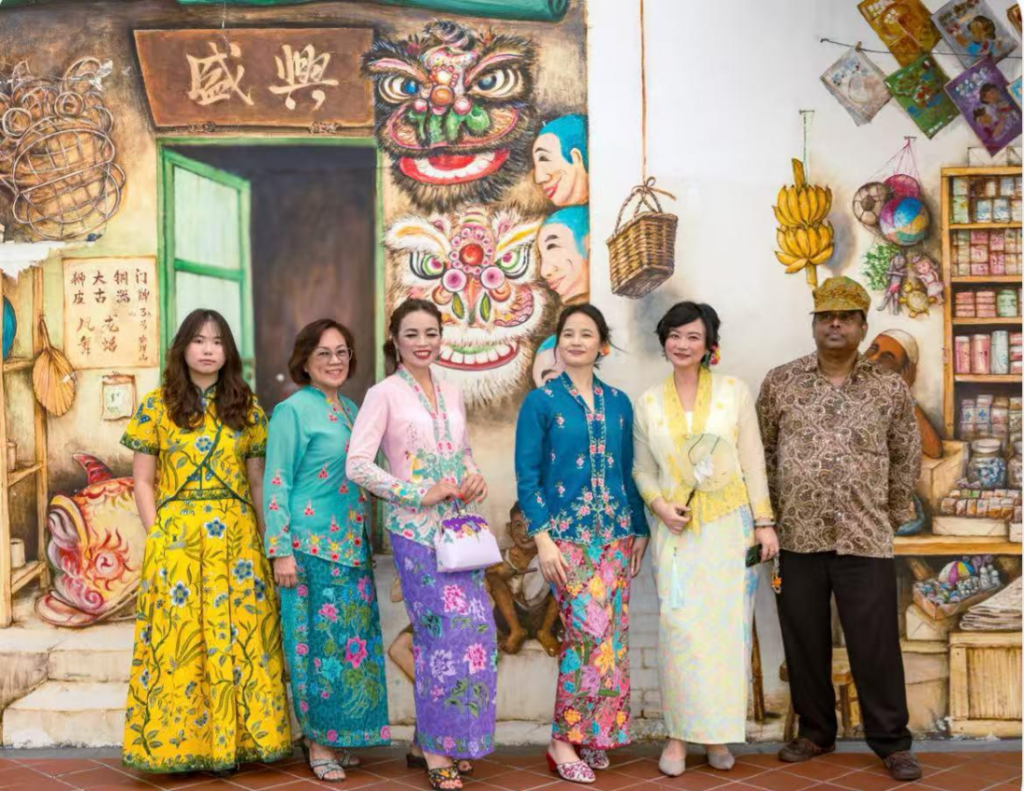 Katie pointed to a group photo and said, ’This is a local Peranakan Chinese, next to her is a pretty lady from Indonesia, and besides me is my Indian friend from British Alumni Singapore.’
The male lead of this photography exhibition is an inspirational singer from the Philippines who has represented Singapore at the Summer Youth Olympic Games and performed in concerts at Esplanade, Singapore.
Katie pointed to a group photo and said, ’This is a local Peranakan Chinese, next to her is a pretty lady from Indonesia, and besides me is my Indian friend from British Alumni Singapore.’
The male lead of this photography exhibition is an inspirational singer from the Philippines who has represented Singapore at the Summer Youth Olympic Games and performed in concerts at Esplanade, Singapore.
 At dusk in Chinatown, light filters through the gaps in the old buildings. The colourful Peranakan costumes, like a rainbow, tell a story spanning six centuries under the Singapore sky — a story of migration, integration, and the continuation of life.
Sisterhood of Nyonyas: Intricate Peranakan wear in Chinatown
Part A: A Scholar Turned Curator The event was initiated by Katie Zheng, FRSA, the owner of Katia Verde Art Gallery. During her university years, Katie Zheng studied Italian literature and Management at the University of St Andrews, one of the oldest universities in the UK (the same university attended by Prince William and Kate Middleton). Twenty years ago, she and her friends visited Malacca, Malaysia, and happened to buy a set of Peranakan porcelain. ‘I found it strange at the time. It had both East and West elements, and it actually matched my room décor in England quite well.’ She was fascinated by that eclectic feel. ‘Just like the cobalt blue of blue-and-white porcelain travelled from Persia to China, and tea travelled from China to the rest of the world, culture has no borders — it permeates slowly, over centuries.’ In 2014, Katie founded Katia Verde Art Gallery to explore regional cross-cultural arts. In Italian, ‘Verde’ means ‘Green,’and Green also represents the nourishing of our souls. Katie likes to talk with her individual clients to understand their colour and style preferences and then conveys this to the designer. ’It’s a two-way process.’ She said that ordinary merchants simply sell goods for profit, but her work sometimes inspires artists to create new pieces — costumes inspire artists, and artists in turn reinterpret costume, creating a cycle of art. It was precisely her tireless efforts to promote Oriental aesthetics in Southeast Asia — and Peranakan culture in particular — over the past decade, that she was entitled a Fellow of the Royal Society of Arts (FRSA).
On the left: Katie Zheng, FRSA, Founder of Katia Verde Art Gallery, Singapore
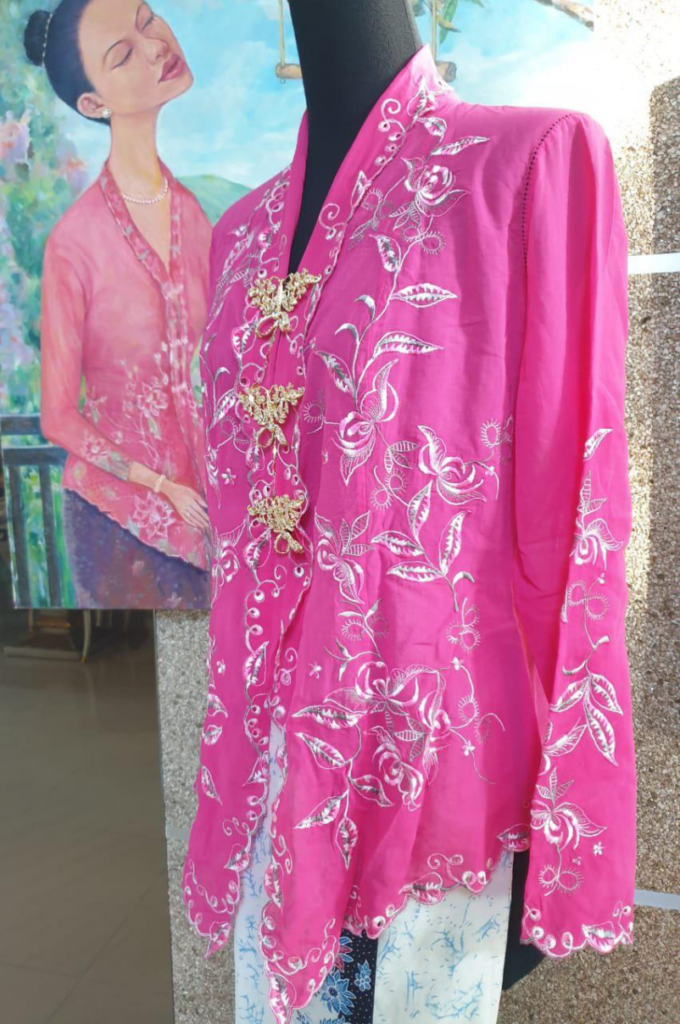
Part B: Stories Woven into Cloth Many people became familiar with Peranakan culture through the TV series ’The Little Nyonya.’ As early as the 15th century, Chinese immigrants to Southeast Asia intermarried with local women (usually Malays), and their descendants came to be known as Peranakan Chinese, with males called ’Baba’ and females called ’Nyonya.’ Over centuries, they intertwined Chinese embroidery, Malay batik, European tailoring, and Indian patterns to create a unique Southeast Asian identity. ’The Nyonya kebaya consists of two parts,’ Katie said, picking up a blouse. ’The top is called a Kebaya, and it’s a fitted cut; the bottom is a wrap skirt, made of batik fabric.’ The cut of the Kebaya is most exquisite in Malaysia, highlighting the curves of a woman’s figure. The batik fabric used in the wrap skirt is Indonesia’s national treasure, listed as a UNESCO Intangible Cultural Heritage of Humanity. Authentic batik is hand-painted, stamped, or a combination of the two, and can take an artisan months to complete. Many batiks on the market today use printed fabric with batik-style patterns, but the craftsmanship is nowhere near that of authentic batik.
A little something handcrafted with love: a relaxing Saturday afternoon in the shop
Katie then picked up a pair of beaded shoes, the uppers (Kasut Manek) of which featured a cat and a dog playing together as friends. ’This is fine bead embroidery; these beads are so tiny that a regular needle cannot pass through them. The craftsman who made these shoes was featured in a Malaysian newspaper; he’s been doing this by hand for decades. A good pair of beaded slippers takes several months to complete.’ In Katie’s view, a good Peranakan outfit can express one’s personality: ’Ordinary outfits look the same to everyone, but a designer’s piece allows you to express your own temperament. Costume is an important carrier of culture, conveying each person’s identity, status, and even preferences.’
Pink Nyonya Kebaya with matching classic butterfly kerongsang
Part C: A Meeting of Cultures The ’Peranakan Through the Lens’ photography exhibition originated from Katie’s love for Peranakan arts. ’We’re not just taking pictures; we’re telling stories through costumes,’ Katie said. What is even more striking is that the participants come from completely diffrent cultural backgrounds.
Katie pointed to a group photo and said, ’This is a local Peranakan Chinese, next to her is a pretty lady from Indonesia, and besides me is my Indian friend from British Alumni Singapore.’
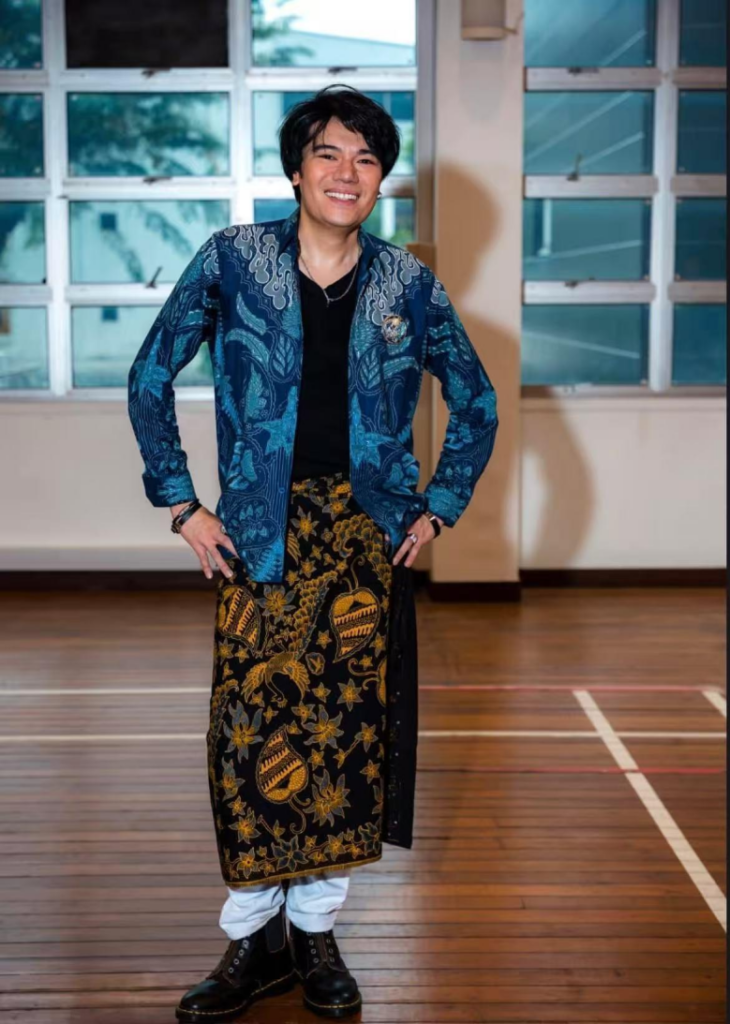
The male lead of this photography exhibition is an inspirational singer from the Philippines who has represented Singapore at the Summer Youth Olympic Games and performed in concerts at Esplanade, Singapore.
Erick Guansing, Singapore-based singer and celebrity vocal coach
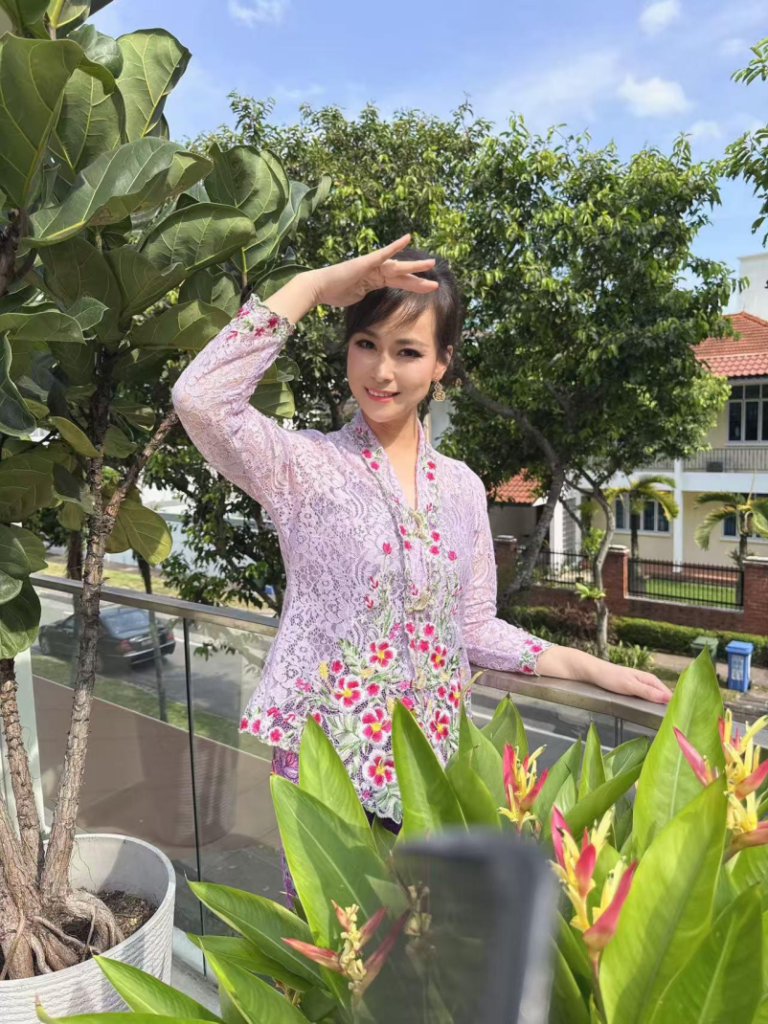
The female lead of the photography exhibition is from China and is a well-known host for gala dinners and charity events.
Wang Hui, host and teacher at Sian Chay Charity Centre
’Can you tell who the real Peranakan descendants are?’ Katie asked with a smile. People from different countries, races, and professions came together because of this photography exhibition. They exchanged contact details and chatted enthusiastically — some even felt as though they had known each other for a long time. In Katie’s view, this is precisely the core characteristic of Peranakan culture — openness and inclusiveness.
The cherished moment with classic sarong kebaya: Katia Verde Art Gallery Special collection
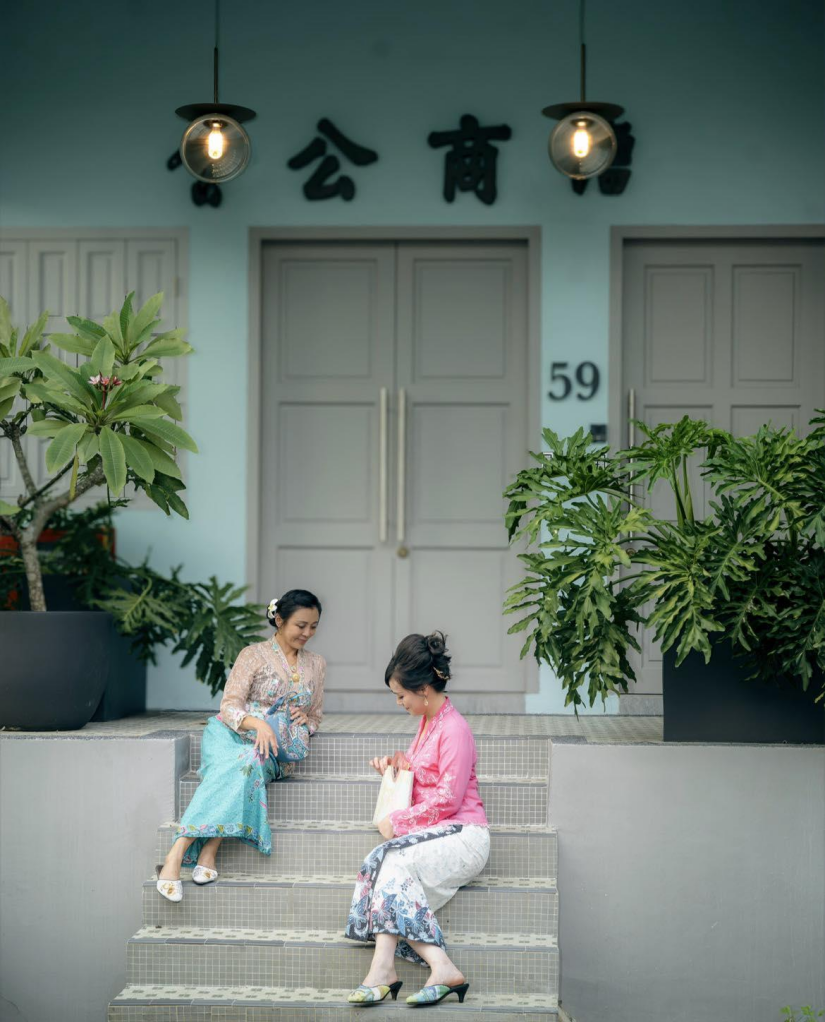
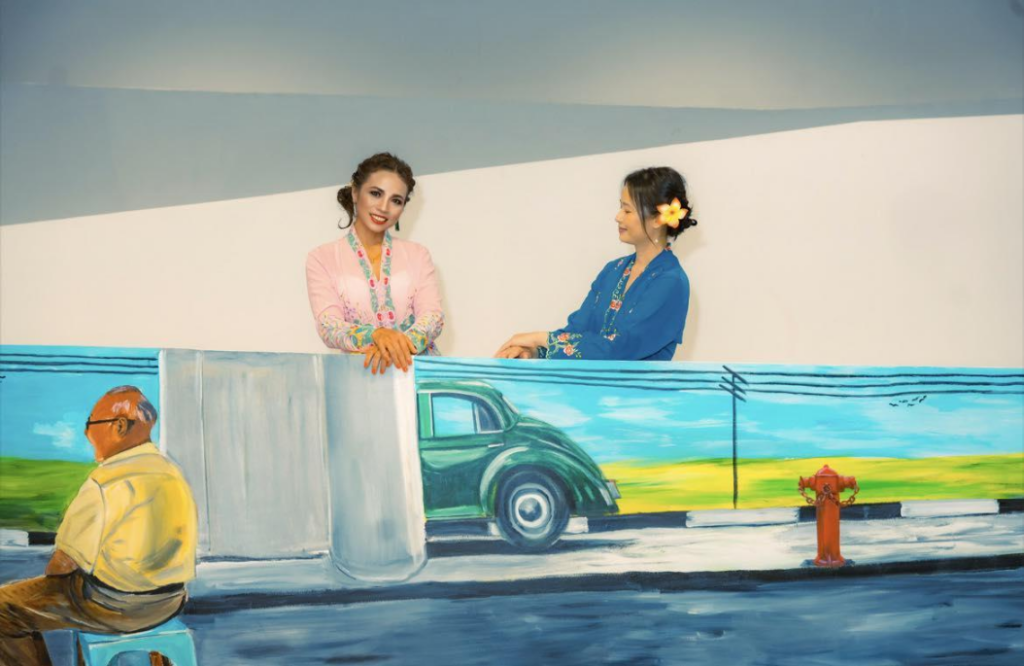
Part D: A Wonderful Harmony This photo, showing two ladies in sarong kebaya standing in front of a mural in Chinatown, as if stepping into a three-dimensional scene, attracted foreign onlookers when it was taken. Indeed, many of Katia Verde Art’s customers are international visitors, who are often amazed by the richness of local Peranakan arts and crafts — a unique cultural indulgence.
Looks like part of the painting
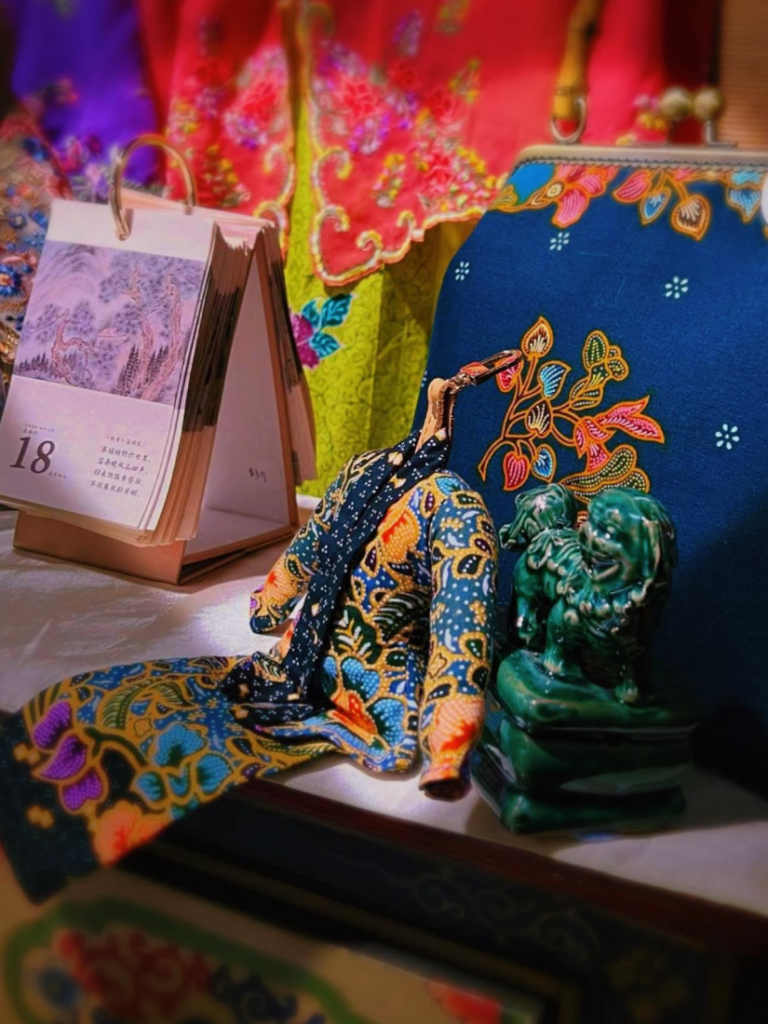
Stepping into Katia Verde Art Gallery, you’ll feel a wonderful harmony: Peranakan paintings hang on the wall, next to a cheongsam; an Indian baby elephant god sits on one side, while a bronze figurine of the auspicious symbols of fortune, prosperity, and longevity from Guangzhou sits on the other; Indonesian hand-drawn batik fabric is spread across the table, with a pair of exquisite beaded slippers placed in front. ’Many people limit Peranakan culture to ‘tradition,’ but actually, eclecticism is a sophisticated art form,’ Katie said. Her shop is such a fusion space — it’s not a purely Peranakan store, but rather the beginning of an encounter in art. If you would like to experience the beauty of Southeast Asia firsthand, the Gallery frequently hosts salons, workshops, and tasting events to allow more people to get closer to Southeast Asian art and culture.
At dusk in Chinatown, light filters through the gaps in the old buildings. The colourful Peranakan costumes, like a rainbow, tell a story spanning six centuries under the Singapore sky — a story of migration, integration, and the continuation of life.
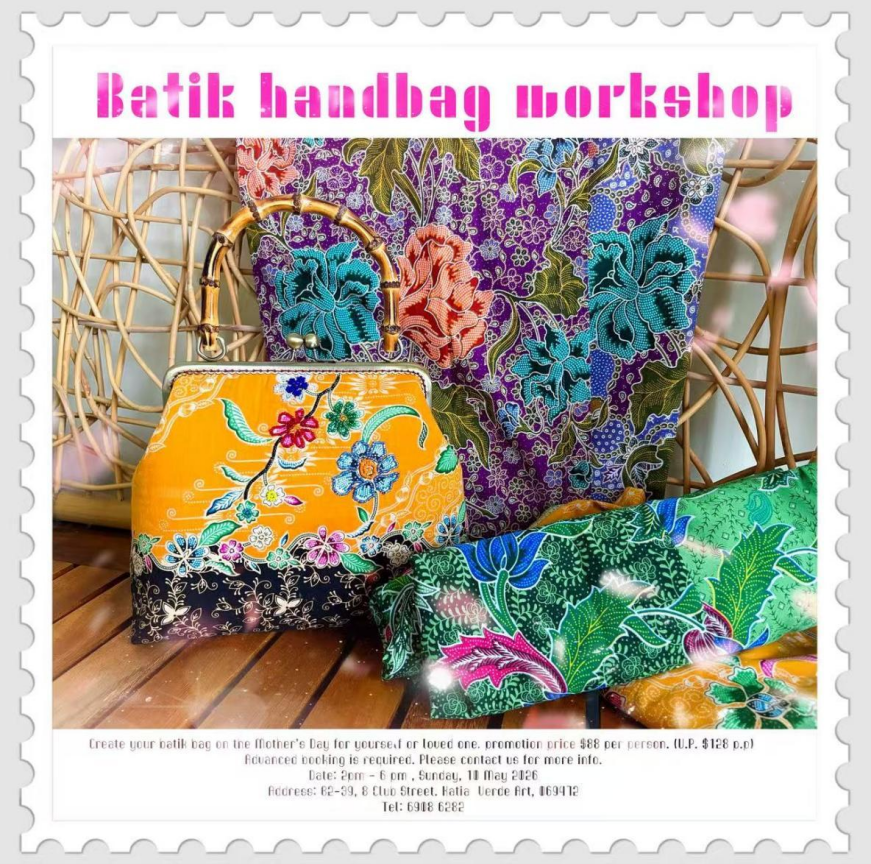
| Step inside Katia Verde Art Gallery Address: Chinatown ICON Link@ClubStreet 8 Club Street, B2-39 Mercure Icon Singapore City Centre, Singapore 069472 Opening hours: Monday to Friday, 11:00 AM to 5:00 PM (by appointment only) Appointment hotline: +65 6908 6282 Website: www.katiaverde.com Mother's Day workshop Handmade Peranakan bag workshop on Mother's Day (May 10th, 2pm – 6pm). Sew a heartwarming Mother's Day gift by hand. Spaces are limited; please register in advance. To register: +65 6908 6282 (Katia Verde Art Gallery) |




 Home Page/首页